By Stacy Williams, MSN, MBA, RN
The Day Everything Shifted
I want to tell you about a girl.
She was seventeen years old and she was the most difficult patient I had ever encountered. In the psychiatric unit where I worked, we rarely cared for children — our patients were almost exclusively adults. But there she was, separated from the general population, temporarily placed in a room with a large window that faced the nurses’ station.
Every time I looked up, the curtain was open.
Every time I looked up, she was naked.
I had to physically restrain her to place a hospital gown on her. She fought me with everything she had. At one point she fought so hard that she broke one of my nails down to the bleeding point. I was frustrated. I was exhausted. I was angry. In the back of my mind — and I am not proud of this — I had already decided what kind of person she was.
I thought she was just a bad kid.
Then her mother came for a visit.
Mom was tattooed from head to toe. Mom reeked of marijuana. Mom was dressed so inappropriately that the CPS caseworker had to loan her a cardigan just so she could be allowed inside the building.
After the visit I spoke with the caseworker and learned the truth.
This mother had been using her seventeen year old daughter as a sex worker for years — to fund her drug addiction.
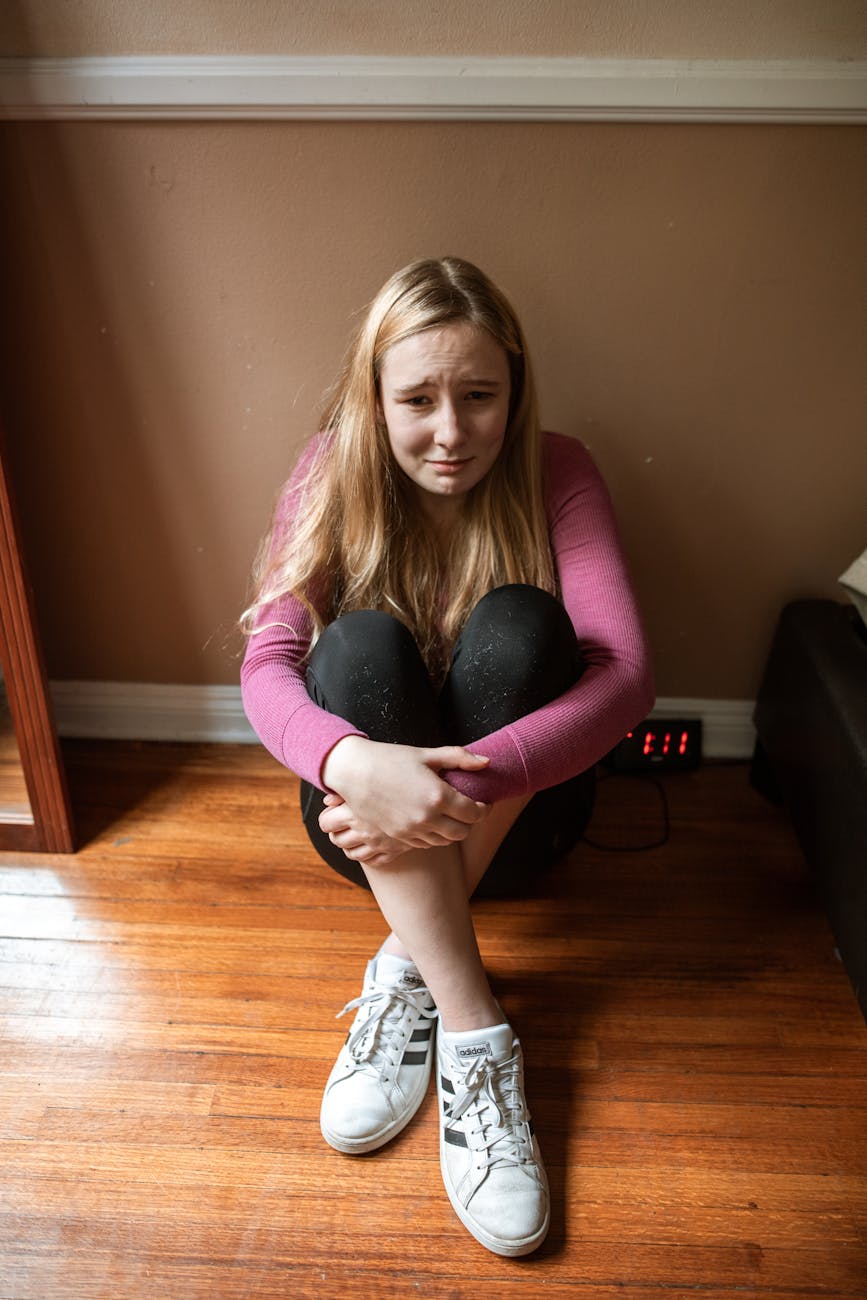
That was why it was so difficult to get this child to keep her clothes on. She was not being defiant. She was not a bad kid. She had been so conditioned — so thoroughly violated by the person who was supposed to protect her — that nakedness was simply her normal. Her body had never been her own. Why would she treat it as though it was?
I had been angry with this child all day.
And in that moment, my heart broke completely open.
That was the day I truly understood mental illness. Not from a textbook. Not from a lecture. From a seventeen year old girl with a broken nail and a borrowed cardigan and a story that no child should ever have to carry.
Something shifted in me that day that has never shifted back.
Your Brain Is an Organ Too
Let me say something that should be obvious but apparently is not.
Your brain is part of your body.
It is an organ — just like your heart, your lungs, your kidneys. It has chemistry. It has electrical activity. It can malfunction. It can be damaged. It can be diseased. And just like every other organ in your body, when it is not functioning correctly, it needs treatment.
When your heart does not work properly you take medication. Nobody questions it. Nobody tells you to just think more positively about your cardiovascular system. Nobody asks why you cannot simply choose to have a healthier heartbeat.
When your lungs are compromised you use an inhaler. When your thyroid is off you take a pill. When your blood pressure climbs you manage it with medication and lifestyle changes and your doctor monitors you regularly.
But when the organ in question is the brain — when the chemistry is off, when the wiring misfires, when the very instrument we use to perceive and process reality is the thing that needs repair — suddenly we expect people to just handle it. To push through. To pray it away. To be stronger. To stop being so sensitive.
We medicate every organ in the human body except the one that controls everything else.
And then we wonder why people are suffering.
What Stigma Actually Looks Like
People think stigma is a word. An attitude. Something abstract that exists out there in society somewhere.
I want to tell you what stigma actually looks like in real life.
It looks like colleagues — fellow nurses, people who should know better — pulling me aside and asking, genuinely puzzled, “How can you work with those people?” Those people. As if the patients in my care are a different species rather than human beings whose brains are struggling.
It looks like a single psychiatric diagnosis following someone for the rest of their life. Not as a medical history — as a label. As a judgment. As a reason to dismiss everything they say, question every decision they make, and assume the worst about who they are as a person.
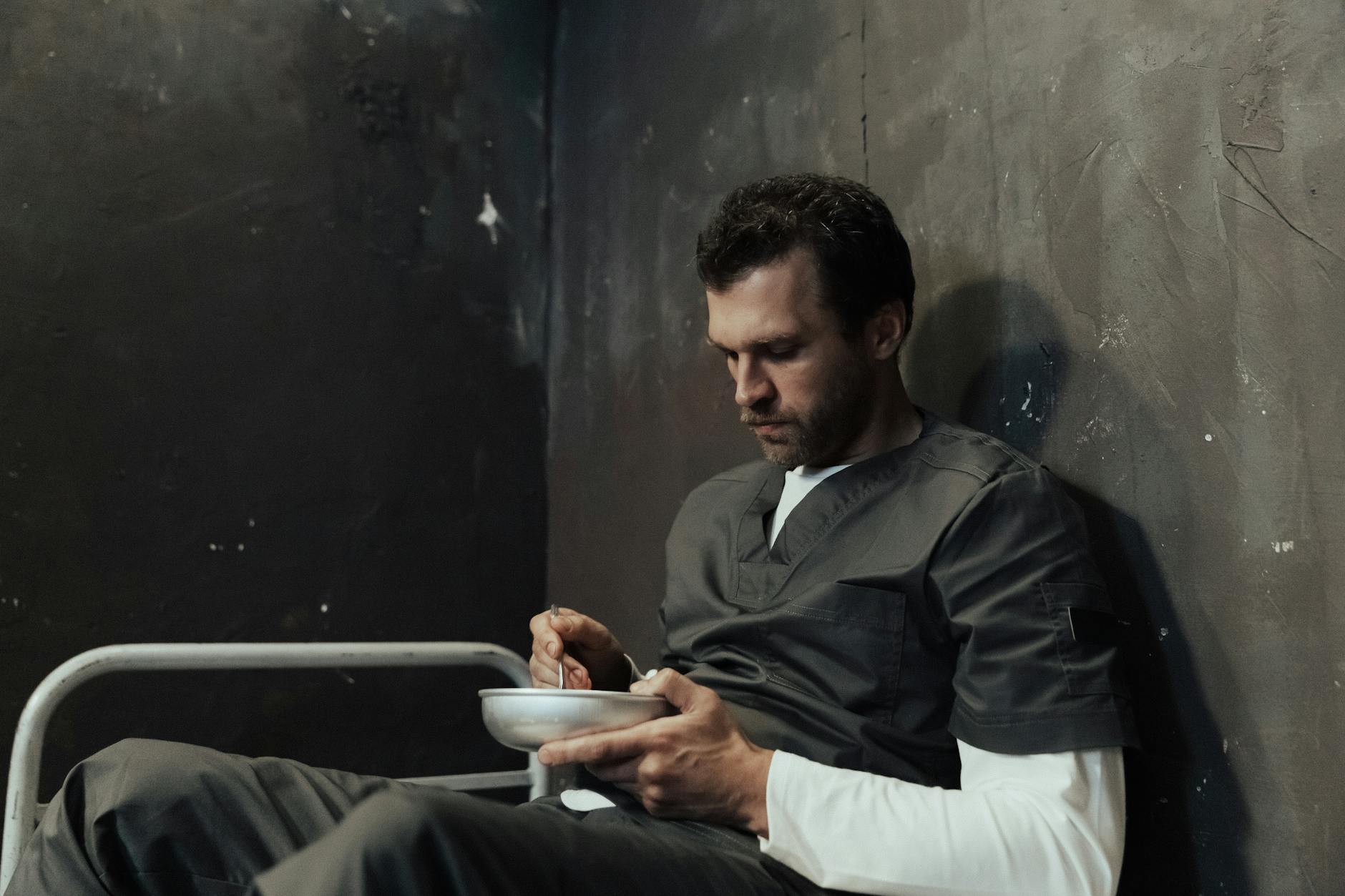
It looks like a mentally ill man who ends up in jail for something as minor as trespassing. While incarcerated he gets into a fight — not because he is violent by nature, but because he is scared and confused and completely unequipped for the environment he has been placed in. He is protecting himself. Now he has additional charges. His sentence grows longer. He becomes increasingly depressed because he genuinely does not understand how he got here or how to get out. The system treats him like a criminal because he is in a criminal setting — and that treatment makes everything worse. The illness deepens. The behavior escalates. And everyone around him shakes their head and says, see, this is what these people are like.
Nobody stops to ask what happened to him. Nobody asks what was wrong with his brain before any of this started. Nobody treats the organ that was sick in the first place.
That is what stigma looks like. Not a word. A life derailed.
Mental Illness in the Black Community — The Truth We Do Not Talk About Enough
In the Black community specifically there is a particular silence around mental illness that I have witnessed throughout my career and my life.
It is not that mental illness does not exist in our community. It very much does. It is that we have been taught — by history, by necessity, by survival — not to name it.
Most people in the Black community do not recognize mental illness, or do not have access to the resources needed for an appropriate diagnosis, or are deeply reluctant to seek help out of fear of being stigmatized — labeled a drug seeker, labeled unstable, labeled dangerous. These are not irrational fears. They are rooted in real experiences with systems that have not always treated Black patients with dignity or care.
And so instead of diagnosis and treatment, we got accommodation.
Almost every Black family I know has a story about the confused uncle. The one who lived in the back bedroom. The one who everybody made allowances for. That’s just how he is. Nobody called it schizophrenia or bipolar disorder or untreated trauma. They just quietly rearranged the household around his episodes and kept it moving. Because what was the alternative? A system that might make things worse? A community that would talk?
There is a generation of Black men and women who spent their lives in back bedrooms and basements when they could have been living — fully, completely, with treatment and support and dignity — if only someone had named what was happening and helped them get care.
That silence has a cost. We are still paying it.
What I Need You to Understand
I have spent my career in psychiatric nursing because I believe — with everything in me — that mental illness is real, that it is medical, that it is treatable, and that the people who live with it deserve the same compassion and care we extend to anyone with a heart condition or a chronic illness.
I need you to understand that most mental illness does not look like what you see in movies. It does not look like the dramatic, visible, undeniable symptoms of severe psychosis. It looks like your coworker who cannot get out of bed some mornings. It looks like your neighbor who drinks too much because the anxiety never stops. It looks like your teenager who is not just moody — who is genuinely, dangerously struggling. It looks like a seventeen year old girl who has been so thoroughly broken by the people who were supposed to love her that she does not know how to exist in her own skin.
It looks like people. Ordinary, complicated, deeply human people whose brains need help.
Bipolar disorder is not a personality flaw. Depression is not laziness. Anxiety is not weakness. PTSD is not something you should just get over. These are medical conditions. They have names and diagnoses and treatment protocols and medications that work — if people are not too ashamed to take them.
The shame is killing people. Literally.
What You Can Do
You do not have to be a psychiatric nurse to make a difference. You just have to be willing to change the way you talk about mental illness — in your home, in your community, in the way you respond when someone tells you they are struggling.
Stop saying those people. Start saying people.
Stop treating a psychiatric diagnosis like a character verdict. Start treating it like the medical information it is.
Stop telling people to pray harder, push through, or just be stronger. Start asking how you can help them find care.
And if you are someone who is quietly struggling — if you are managing something that has no name yet because you have been too afraid to give it one — please hear me when I say this:
You are not weak. You are not broken. You are not too far gone.
Your brain is an organ. And it deserves to be treated.
Stacy Williams, MSN, MBA, RN is a psychiatric nursing specialist. She has spent her career caring for patients across inpatient, outpatient, emergency, and forensic psychiatric settings. She is an advocate for mental health equity, healthcare worker rights, and the belief that every human being deserves dignified care.
If you or someone you love is struggling with mental health, help is available:
- NAMI Helpline: 1-800-950-6264 | nami.org
- 988 Suicide and Crisis Lifeline: Call or text 988
- National Alliance for Eating Disorders: 1-866-662-1235
- SAMHSA National Helpline: 1-800-662-4357 (free, confidential, 24/7)
 Mind and Body Healing
Leave a comment